"El humano es el autor. Si yo escribo un artículo o un relato y le pido a una IA que lo edite o lo pula, eso no transfiere la autoría a la IA, igual que no se la transferiría recibir exactamente la misma ayuda de un editor humano. No creo que al final seamos capaces de desenredar todo esto, y a medida que la gente crezca acostumbrada a que la IA forme parte del proceso creativo, el texto, la música, el cine y el arte se entenderán cada vez más como colaboraciones entre humanos e IA". Todo artista tiene partes del oficio en las que flojea", "como el diálogo, la estructura, la composición o cualquier otra. La IA apuntalará cada vez más esas debilidades y dejará a cada uno concentrarse en lo que mejor hace. Una marca de agua puede mostrar que una IA intervino, pero no puede establecer que un humano no ideara la obra. Y con el tiempo sospecho que esa distinción importará cada vez menos. Al final será una rareza, una curiosidad, que en una obra no haya intervenido ninguna IA
//////////////////////////////////////////
ENGLISH
Who Will Care About AI When Everything Is Made with AI? “It Will Be Seen as a Collaboration Between Humans and Technology”
Gemini and Claude already include watermarks in texts and images generated by their engines. Will this spell the end of their professional use? Many experts think quite the opposite: this is only the beginning of their normalization.
During the ordeals that shook Europe in the Early Modern period, a peculiar profession emerged—one that would play a decisive role in enabling judges to send enormous quantities of human flesh to the stake. The so-called witch prickers claimed to practice a thoroughly scientific craft, born of study and experience, based on the assumption that the Evil One left upon the skin of his followers an invisible mark, insensitive to pain: the stigma diaboli. The historian Julio Caro Baroja, in The World of the Witches, describes the activities of one such witchfinder in the early seventeenth century, at the time of the events in Zugarramurdi. He was, more precisely, an anonymous surgeon from Bayonne: “He became highly skilled at identifying the marks of witches, in which the judge placed blind faith. He blindfolded the witches he was to examine and pricked them with a needle. When he found a spot that was insensitive, the proof was complete.”
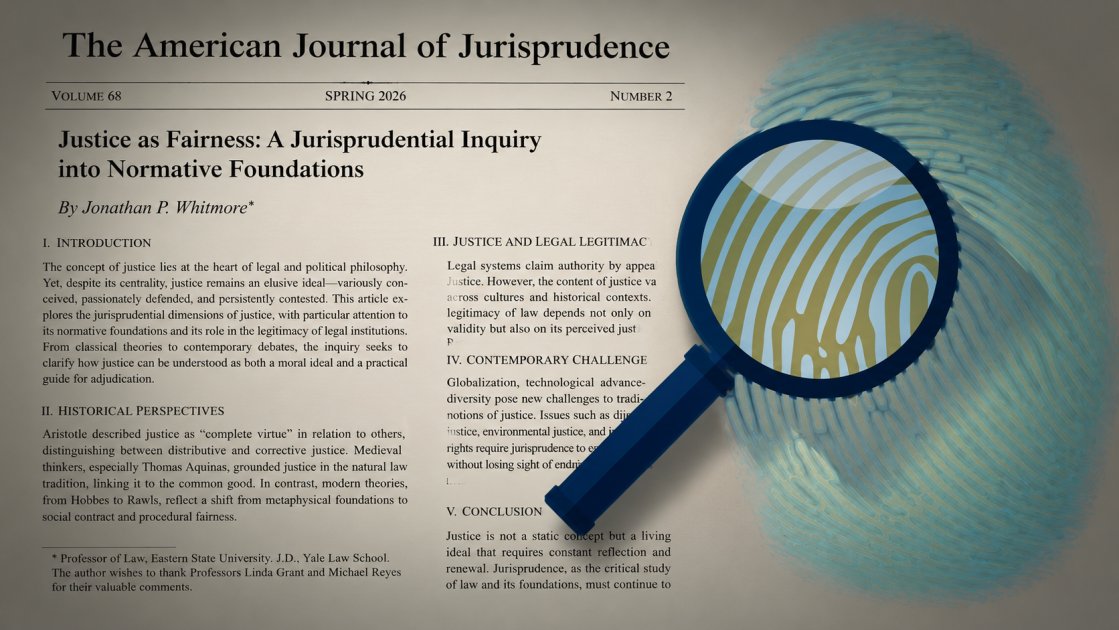
The widespread anxiety prompted by the announcement that Anthropic will introduce an invisible and persistent watermark into text generated by its Claude AI model—something many have already denounced as a new witch hunt—has swept across social media this week, bringing with it its own stigma diaboli and its own witch prickers. This time the mark is real, but the problem remains the same as in the case of the credulous magistrate Pierre de Lancre: faith in what such a sign can actually prove.
The arms race now laying waste to human writing began on November 30, 2022, when, under severe financial pressure, OpenAI, led by Sam Altman, decided to launch ChatGPT, a product in which the company itself did not have much confidence and which Google had previously considered and shelved. The impact was formidable. Suddenly, a machine could write by itself—perhaps worse than professional writers, but unquestionably better than most people. Why keep struggling with something so demanding and so poorly rewarded?
First, emails fell into the hands of generative AI. Then came social networks such as LinkedIn, where the few remaining humans wander like shadows among millions of graphomaniac robots. And then everything else followed: marketing, university assignments, journalism, books—even literature! Scandals are erupting everywhere. Stories winning prestigious prizes, such as Jamir Nazir’s award-winning piece in Granta, bring disgrace upon the prize when they are discovered to be riddled with AI; novels bought in the United States for million-dollar advances, such as Mia Ballard’s Shy Girl, are abruptly withdrawn when the stench of robotic writing begins to emanate from them; even an essay by Steven Rosenbaum on the need to defend truth in the age of AI is plunged into ignominy when it turns out to be riddled with AI-hallucinated falsehoods.
The witch prickers hunting for the diabolical mark of artificial writing are, in this case, the celebrated AI detectors. The first generation—GPTZero, Originality.ai, Turnitin AI, and Copyleaks—were sold to publishers and universities as digital forensic experts capable of hunting down fraud. Yet they constantly got things wrong and were quite capable of accusing Homer and Cervantes of having composed their immortal works with the help of machine learning.
The damage could be measured. In 2023, a Stanford study found that seven commonly used detectors classified 61% of English texts written by non-native speakers as AI-generated. A year later, Brian Porter and Edouard Machery brought together 1,634 readers in Nature Scientific Reports and asked them to distinguish AI-generated poems from canonical poetry. They were right only 46.6% of the time—worse than flipping a coin—and, moreover, they rated any poem more poorly as soon as they were told it was artificial. The label alone was enough to condemn it. Caro Baroja had already captured the problem when summarizing the Cautio Criminalis, in which the Jesuit Friedrich Spee, confessor to women condemned to the stake, denounced that earlier witch hunt in 1631: “Those entrusted with this extraordinary justice must discover criminals and crimes in order to justify their work.”
Now Pangram offers almost miraculous detection, with scarcely any false positives, although with a little effort it can be manipulated into producing false negatives. Even so, it is not 100% accurate. Although platforms such as Substack have recently incorporated it, not without resistance, it would hardly be enough to send a doctoral student to the stake.
And suddenly an entire generation of writers who do not write—who had felt perfectly safe as lazy conductors directing their artificial scribes—are thrown into panic when Anthropic announces that all its AI models released since August 2 will carry an invisible and persistent watermark, using a technically astonishing method: a subtle statistical variation in the generated text that survives copy-and-paste and anything short of fairly determined editing. Only a complete rewrite will destroy the mark—and if you are going to do that, wouldn’t it be easier simply to write the thing yourself?
Anthropic’s justification for infuriating its customers with such an unpopular measure is that it must comply with the European Union’s Regulation 2024/1689, which entered into force precisely on August 2 and requires synthetic content to be identified. And, ultimately, because the rest of its competitors will have to fall into line as well. Some—including OpenAI, Google, Meta, Microsoft, and Mistral—have already signed the EU Code of Practice on transparency for AI-generated content. The only major Western laboratory that has not done so is Elon Musk’s xAI, creator of Grok, AI’s unruly little cousin (dixit Arcadi Espada).
Another suspicion is spreading through online forums and digital gossip mills. Could Claude’s watermark—the one it is about to introduce into generated texts and which has driven everyone crazy—have less to do with European law than Anthropic claims, and more to do with protection against distillation attacks, through which one model steals another model’s soul, as Chinese AIs have been accused of doing?
But there is another problem: this whole business of marking written content is a mess. Article 50 establishes two different levels: the laboratory that applies the mark (50.2), and the person who publishes or disseminates the content (50.4). This second level specifically exempts someone who reviews the material and assumes editorial responsibility for it—yet the announced watermark is still indiscriminately applied. It can appear, for example, when AI is used merely as a stylistic editor for a text that is entirely your own, something that today is virtually indispensable for any professional writer.
What kind of process really deserves to be marked? Does any of this actually solve the problem of trust? Is it the classic Brussels effect in action, or merely the staging of a contrived theater of security? Will it put an end to the witch hunt and the age of false accusations, or will it enshrine a two-tier world in which only the laboratories themselves can verify what is human? We spoke to two of the most brilliant and widely followed independent AI analysts online: Andriy Burkov and Andrew S. Curran.
According to Curran, “a watermark applied by the laboratory itself is a much better signal of provenance than trying to infer AI use from someone’s writing style or relying on a third-party detector. The problem is that the absence of a watermark proves nothing either: you can generate something, edit it, partly paraphrase it, translate it into another language and back again; there are many ways to muddy the waters. The main problem is not technical. It is social. No detector is going to stop people from suspecting AI everywhere and seeing it in every shadow. And increasingly, they will be right: from now on, almost all creative work will involve at least some AI.”
Burkov, for his part, warns that “this watermark can only be read reliably in very long texts. It is based on measuring distributions of words and n-grams, so it does not work with a sentence or a paragraph. In a newspaper article it will return a score that cannot reliably be used to detect AI-generated content. Moreover, a simple paraphrase using another model will be enough to reduce that reliability still further. In short: if the score indicating the presence of the watermark runs from 1 to 100, in practice it will never reach 100, which makes it useless, for example, in a court of law.”
You open Claude or ChatGPT, throw in a mountain of data, prompt it with instructions, guidelines, lines of argument, and probably even the conclusions you want it to reach. Enter. Then you sign the generated result without a second thought. Ah—but now that result contains a watermark placed there by the company selling you the model. Does that mean it is no longer yours? “The watermark does not say who owns the text,” Burkov explains. “If an LLM [large language model] generated a text for you at your request and you put your name beneath it, the copyright is yours, not Anthropic’s. Your copyright could only be challenged if someone discovered that the text was an almost identical copy of another work, and the watermark does not show that.”
Curran has no doubts either. In fact, he foresees a hybrid future in which human and machine contributions merge into an indistinguishable whole:
“The human is the author. If I write an article or a story and ask an AI to edit or polish it, that does not transfer authorship to the AI, any more than receiving exactly the same help from a human editor would transfer authorship to that editor. I don’t think we will ultimately be able to disentangle all of this, and as people grow accustomed to AI being part of the creative process, text, music, film, and art will increasingly be understood as collaborations between humans and AI.”
“Every artist has parts of the craft they are weaker at—dialogue, structure, composition, or whatever else. AI will increasingly shore up those weaknesses and allow people to concentrate on what they do best. A watermark may show that an AI was involved, but it cannot establish that a human did not conceive the work. And over time, I suspect that distinction will matter less and less. Eventually it will be an oddity, a curiosity, for a work to have been produced without any AI involvement at all.”
Andrew S. Curran
For all these reasons, both analysts agree that “nothing will truly put an end to false accusations except the passage of time and the acceptance that AI is part of the creative process, and that it is an important tool for helping people bring their vision to life,” as Curran puts it. Burkov, however, fears that in the short term watermarks may actually make the problem worse: “Before, you could say, ‘This AI detector made by some no-name startup isn’t reliable,’ and that worked. Now it is the company that produced the text saying, ‘I can see my watermark here,’ and people who do not understand that this is not binary proof but a score may take that as indisputable truth.”
The most disturbing implication comes from an old idealist of the internet. Jimmy Wales, founder of Wikipedia, warned on X this week that, given a sufficiently long text, the watermark might identify more than just the model: it could also identify the person who instructed it to write the text. Wales is already anticipating the next move in the game: a stampede toward open-weight models, currently dominated by China, which run locally, leaving neither watermark nor record.
“Every artist has parts of the craft they are weaker at,” Curran concludes, “such as dialogue, structure, composition, or anything else. AI will increasingly shore up those weaknesses and allow each person to concentrate on what they do best. A watermark can show that AI was involved, but it cannot establish that a human did not conceive the work. And over time, I suspect that distinction will matter less and less. Eventually it will be an oddity, a curiosity, for a work to have been produced without any AI involvement at all.”
Just a few hours after Anthropic’s announcement, social media is already filling up with all manner of procedures and purpose-built programs designed to circumvent—or simply remove—the devil’s mark altogether. Bad times for the witch prickers.
@ia