By Diego Poole
[Para leer en español, haz clic aquí]
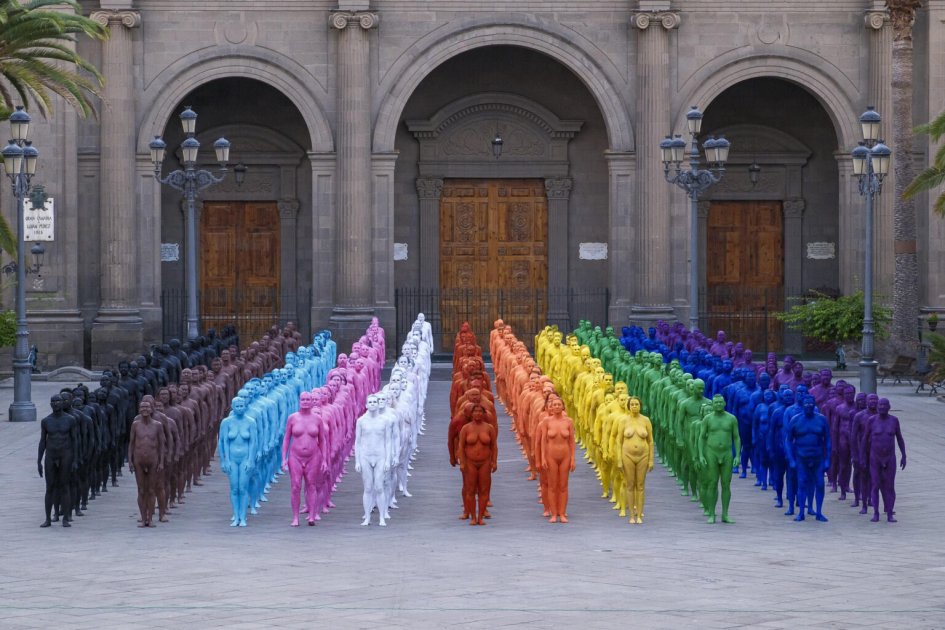
The controversy surrounding the use of the Cathedral of Santa Ana in Las Palmas as the backdrop for a large-scale nude performance during the city's Pride celebrations raises a question that goes far beyond church administration. It concerns the very nature of tolerance, the purpose of institutions, and the duties of those entrusted with their care.
Tolerance has never meant that every institution must abandon the goods that define its very existence. This is one of the oldest principles of the philosophy of law. The law protects institutions not merely because they have existed for a long time, but because they serve goods that society considers worthy of protection, because they are part of the political common good. A cathedral is not just another public square. It is a sacred place, legally recognized as such through the principles of religious freedom and the institutional autonomy granted to religious communities. (*)
For this reason, the controversy is not fundamentally about freedom of expression. Those who organized the event were fully entitled to express their views. The real question is different: should a cathedral become the symbolic stage for an ideological movement whose fundamental principles differ profoundly from those professed by the Catholic Church?
A genuinely pluralistic society should answer no—not because anyone deserves special privileges, but because pluralism presupposes mutual respect between institutions, and such respect necessarily includes respect for their identity. Respecting diversity means allowing each institution to preserve its own distinctive character, rather than turning every symbolic space into a neutral platform available to whichever movement happens to occupy it. Where institutional identities are no longer respected, neither pluralism nor diversity can survive. If a bishop simply blends into the prevailing cultural climate, the Church itself gradually disappears.
From the perspective of the philosophy of law, this controversy reflects a misunderstanding of the limits of tolerance. Tolerance ceases to be a virtue when it becomes indifference toward the very good one has the duty to protect. Every office carries corresponding obligations. Judges are entrusted with defending justice. University presidents are entrusted with safeguarding teaching and academic research. Parents are entrusted with protecting their children. In the same way, bishops are entrusted with defending the sacred character of the Church and of its places of worship.
One virtue that has traditionally been associated with such responsibility is fortitude. Aristotle understood fortitude as the disposition to endure hardship for the sake of what is noble. Thomas Aquinas refined this insight by explaining that fortitude enables a person to persevere in the pursuit of the good despite fear or external pressure. Prudence without fortitude easily degenerates into cowardice. Dialogue without fortitude becomes indifference. Tolerance without fortitude becomes surrender, and ultimately complicity with the very conduct being tolerated.
For this reason, many faithful Catholics have interpreted the bishop's response not as an exercise of prudence but as a failure of pastoral courage. Whether or not one agrees with that judgment, it arises from an understandable expectation: that the shepherd entrusted with the care of a cathedral should publicly defend its sacred identity when that identity becomes the object of ideological appropriation.
Isaiah's image of the "silent watchmen" (Isaiah 56:10) remains strikingly relevant. The prophet does not condemn those who make mistakes, but those who remain silent when it is time to speak. Throughout Christian history, the gravest crises have often been marked less by active betrayal than by hesitant leaders unwilling to bear the cost of defending the truth.
Christ reserved some of His strongest words not for His enemies but for those whose conduct causes the faithful to stumble: "Whoever causes one of these little ones who believe in me to stumble, it would be better for him to have a great millstone fastened around his neck and to be drowned in the depth of the sea" (Matthew 18:6). The warning is directed above all to those entrusted with authority. A bishop's first duty is not to preserve his public image or to avoid controversy, but to protect what is sacred and to strengthen the faith of those under his pastoral care. Think also of the strength with which Jesus Christ defends the sanctity of the Temple in Jerusalem.
As noted above, the irony is that unlimited tolerance ultimately destroys the diversity it claims to protect. When every institution is expected to open itself indiscriminately to any symbolic or ideological use, institutional identity eventually disappears. A cathedral ceases to be a cathedral if those entrusted with its care no longer distinguish between sacred worship and a public performance such as the one that was permitted and publicly justified by the bishop himself (...even after the fact, using the flimsy argument that it promotes tourism).
The lesson of Las Palmas therefore extends far beyond one bishop or one particular event. A society does not lose its identity only through persecution. Sometimes it loses it because those appointed to defend it quietly cease to believe that it is worth defending.
"If these were silent, the stones would cry out" (Luke 19:40).
(*) The Cathedral is not merely a historic building or a cultural symbol, but the house of God, where the Christian community worships Him and where, according to the Catholic faith, Christ is truly present in the Eucharist. Respect for its sacred nature therefore expresses the respect due to God Himself. Let’s see who would dare to allow this in front of a mosque.
[Español]
La polémica en torno al uso de la catedral de Santa Ana de Las Palmas como escenario de una actuación multitudinaria de desnudos durante las celebraciones del Orgullo de la ciudad plantea una cuestión que va mucho más allá de la administración eclesiástica. Afecta a la naturaleza misma de la tolerancia, al fin de las instituciones y a los deberes de quienes tienen encomendada su custodia.
La tolerancia nunca ha significado que una institución deba renunciar a los bienes que definen su existencia. Este es uno de los principios más antiguos de la filosofía del derecho. El derecho protege a las instituciones no simplemente porque existan desde hace siglos, sino porque sirven a bienes que la sociedad considera dignos de protección, porque forman parte del bien común político. Una catedral no es una plaza pública más: es un lugar sagrado, reconocido legalmente y protegido porque para muchos representa la presencia de Dios en medio de su pueblo.(*)
Precisamente por eso, esta polémica no versa fundamentalmente sobre la libertad de expresión. Quienes organizaron el acto gozaban de pleno derecho a expresar sus opiniones. La cuestión es otra: ¿puede una catedral convertirse en el escenario simbólico de un movimiento ideológico cuyos planteamientos difieren profundamente de los que profesa la Iglesia católica, cuya sede principal en una ciudad es precisamente la catedral?
Una sociedad genuinamente pluralista debería responder que no, y no por reconocer privilegio alguno a nadie, sino porque el pluralismo presupone el respeto mutuo entre las instituciones, lo cual implica el respeto a su identidad. Respetar la diversidad significa permitir que cada institución conserve su propia identidad, en lugar de transformar todo espacio simbólico en una plataforma neutra al servicio del movimiento que, en cada momento, la ocupe. Allí donde no hay respeto por las identidades, no hay pluralismo ni diversidad.
Desde la perspectiva de la filosofía del derecho, esto refleja una incomprensión de los límites de la tolerancia. La tolerancia deja de ser una virtud cuando se convierte en indiferencia hacia el bien mismo que se tiene el deber de proteger. Todo cargo lleva consigo obligaciones correlativas. Los jueces deben defender la justicia. Los rectores de universidad deben defender la docencia y la investigación. Los padres deben defender la educación de sus hijos. Del mismo modo, a los obispos se les confía la defensa del carácter sagrado de la Iglesia y de sus lugares de culto.
Una virtud asociada a semejante responsabilidad es la fortaleza. Aristóteles entendía la fortaleza como la disposición a soportar dificultades que se oponen el cumplimiento del deber. Tomás de Aquino precisó este concepto al explicar que la fortaleza permite perseverar en la búsqueda del bien pese al temor o a la presión externa. La prudencia sin fortaleza degenera fácilmente en cobardía. El diálogo sin fortaleza se convierte en indiferencia. La tolerancia sin fortaleza se convierte en rendición y, al final, en complicidad con la conducta tolerada.
Por eso, muchos fieles han interpretado la respuesta del obispo no como un ejercicio de prudencia, sino como una falta de valentía pastoral. Se comparta o no ese juicio, nace de una expectativa comprensible: que el pastor a quien se ha confiado el cuidado de una catedral defienda públicamente su identidad sagrada cuando esta se convierte en objeto de apropiación ideológica.
La imagen bíblica de los «pastores mudos» de Isaías (56,10) conserva una vigencia sorprendente. El profeta no condena a quienes se equivocan, sino a quienes callan cuando es necesario hablar. A lo largo de la historia cristiana, las crisis más graves han estado marcadas menos por la traición activa que por gobernantes vacilantes, poco dispuestos a asumir el coste de defender la verdad.
Cristo reservó algunas de sus palabras más duras no para sus enemigos, sino para aquellos cuya conducta escandaliza a los fieles: «Al que escandalice a uno de estos pequeños que creen en mí, más le valdría que le colgaran al cuello una piedra de molino y lo hundieran en lo profundo del mar» (Mt 18,6). La advertencia se dirige, sobre todo, a quienes tienen encomendada una responsabilidad de autoridad. El primer deber de un obispo no es preservar su imagen pública ni evitar la polémica, sino proteger lo sagrado y fortalecer la fe de quienes están a su cuidado. Pensad también en la fuerza con la que Jesucristo defiende la sacralidad del Templo de Jesusalén.
Como hemos apuntado más arriba, la ironía está en que la tolerancia ilimitada acaba destruyendo la diversidad que dice proteger. Cuando se espera de toda institución que se abra indiscriminadamente a cualquier uso simbólico o ideológico, la identidad institucional desaparece. Una catedral deja de ser una catedral si quienes tienen encomendada su custodia ya no distinguen entre el culto sagrado y una performance como la permitida y justificada por el propio obispo (también a posteriori, con el triste argumento de que fomenta el turismo).
La lección de Las Palmas se extiende, por tanto, mucho más allá de un obispo o de un acontecimiento. Una sociedad no pierde su identidad solo por la persecución. A veces la pierde porque quienes fueron designados para defenderla dejan, silenciosamente, de creer que merece la pena hacerlo.
Si estos callan, gritarán las piedras (Lc 19,40).
Diego Poole
(*) La catedral no es simplemente un edificio histórico ni un símbolo cultural, sino la casa de Dios, donde la comunidad cristiana le rinde culto y donde, según la fe católica, Cristo está realmente presente en la Eucaristía. El respeto a su carácter sagrado expresa, por tanto, el respeto debido al mismo Dios. A ver quién se atreve a permitir esto delante de una mezquita.