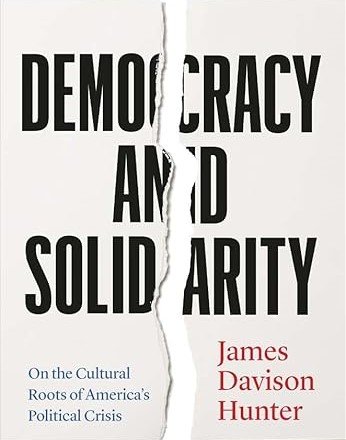
Liberal democracy in America has always contained contradictions—most notably, a noble but abstract commitment to freedom, justice, and equality that, tragically, has seldom been realized in practice. While these contradictions have caused dissent and even violence, there was always an underlying and evolving solidarity drawn from the cultural resources of America’s “hybrid Enlightenment.”
James Davison Hunter, who introduced the concept of “culture wars” thirty years ago, tells us in this new book that those historic sources of national solidarity have now largely dissolved. While a deepening political polarization is the most obvious sign of this, the true problem is not polarization per se but the absence of cultural resources to work through what divides us. The destructive logic that has filled the void only makes bridging our differences more challenging. In the end, all political regimes require some level of unity. If it cannot be generated organically, it will be imposed by force.
Can America’s political crisis be fixed? Can an Enlightenment-era institution—liberal democracy—survive and thrive in a post-Enlightenment world? If, for some, salvaging the older sources of national solidarity is neither possible sociologically, nor desirable politically or ethically, what cultural resources will support liberal democracy in the future?
Hunter es la referencia mundial sobre las llamadas guerras culturales (1991). El distinguido profesor de Virginia, vuelve ahora al tema, dándole, desde la historia reciente de los EE.UU., un enfoque más amplio, que descubre una rotura con lo que la arqueología cultural apuntaba a finales del siglo pasado. El texto defiende el particular originalismo mítico estadounidense basado en lo que llama una ilustración híbrida (religiosa-protestante). Repasa toda la historia de la nación norteamericana haciendo hincapié en la preeminencia de las ideas, de la cultura, sobre la política. Sus casi 500 pp. se leen con avidez, pues Hunter escribe muy bien, sabia e ilustradamente.
Vemos aquí, toda la historia central de la modernidad, del nacimiento al ocaso, dejando en el autor una añoranza con deje pesimista. Tanto la democracia como la solidaridad están hoy rotas por dentro. No hay aparentes razones para el diálogo ni el consenso, y la polarización excesiva denota agotamiento y colapso cultural. Eso se ve primeramente en los USA, pero girará, ya lo hace, por todo el mundo.